
Fashion
Prompt
Creator
Twelve fully-formed prompts from one house — each a different scene, garment, camera and film, and every one of them of a piece with the decade it is set in.
The clothes, and the camera that saw them.
Start with a house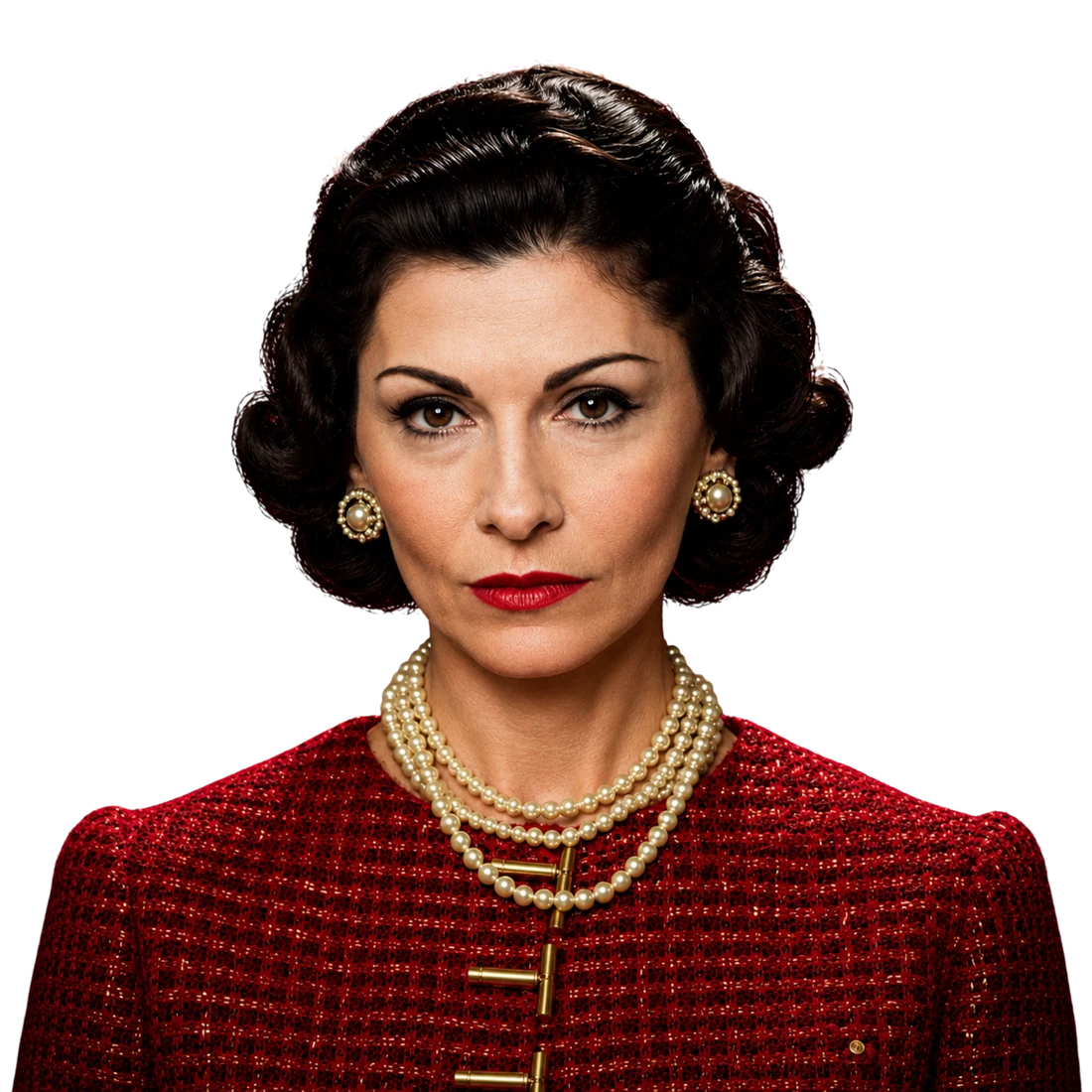
Why this one exists
A dress is not a style
Ask for “a Chanel dress” and you get the idea of one — a black shape with a string of pearls, floating in no particular year. The house cut real garments, in real rooms, and they were photographed on the equipment of the day. That is what these prompts carry.
The decade holds
A seafront at Deauville in 1926 cannot be shot on a Hasselblad 500C, because there wasn’t one. Every scene, garment, camera, lens and film here is tagged to the decades it belongs to, and the generator will not pair across them.
It runs in your browser
Nothing is sent anywhere. No account, no key, no queue. The whole library is a file this page loads, and the prompts are assembled on your own machine.
One — the generator
Select your house.
Two — the house
Profile
Three — the set
Worth knowing
On platform syntax. Midjourney reads --ar, --stylize and --chaos as flags. Leonardo and Stable Diffusion don’t — for those, the recommended ratio is written in plain text and set in the platform’s own controls.
On the house, not the person. The prompts name the house as an influence on the picture, in the way a photographer’s brief would. They are not claims that the house made, sold or endorsed anything in them.
On naming a living designer. Three of the five houses here were founded by someone still living, and a house name is a brand as well as a person. Some platforms restrict prompts that name a living designer; others filter brand names, on their own terms, and that behaviour changes without notice. The name is used by default because it is the strongest single signal in the prompt — and Describe the house instead, above the set, swaps it for a description of the house at the same seed, so you keep the photograph and lose only the name.
On what the models wear. Where a house cut for one gender only, the generator casts to match the garment rather than putting an evening gown on a man. Houses that cut for everyone will be tagged that way when they are added.
Missing a house? The library grows. Tell me who to add.